Samsung’s Chip Division Underwhelms in Costly AI Memory Race
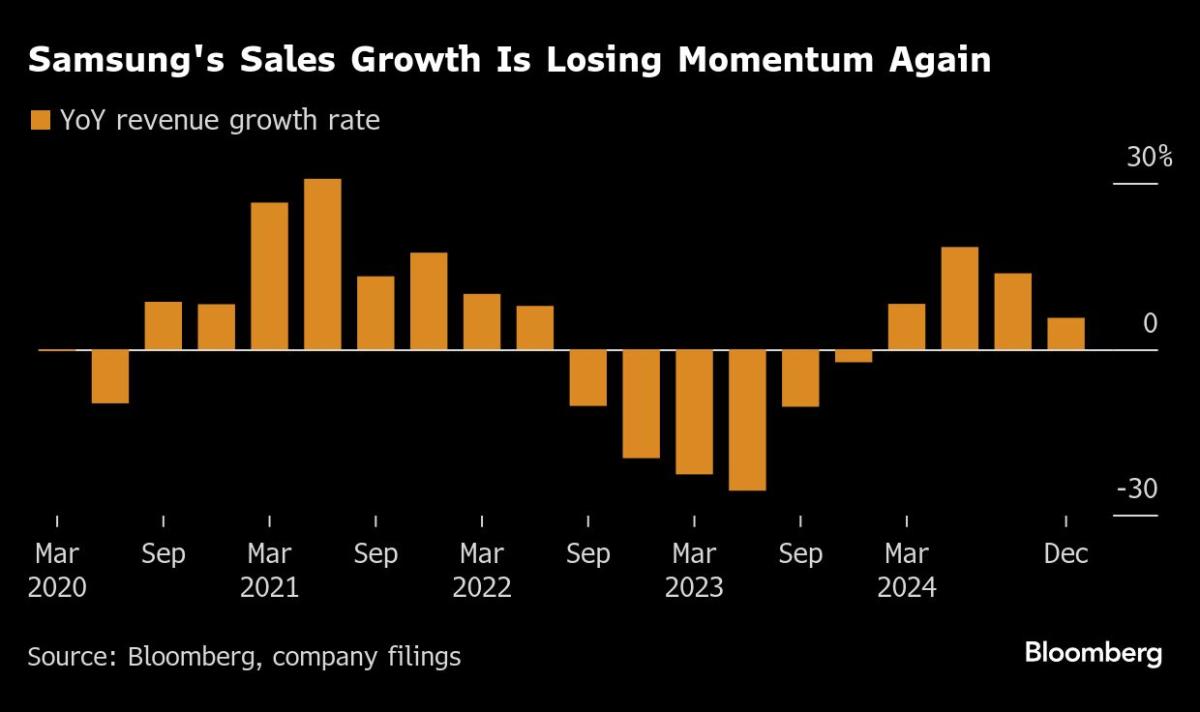
(Bloomberg) — Samsung Electronics Co.’s pivotal chip division reported a smaller-than-expected profit as the world’s largest memory maker fights to narrow the lead arch-rival SK Hynix Inc. has in the artificial intelligence arena. Most Read from Bloomberg Samsung is ratcheting up its research and operating costs, with executives saying the spending on memory would stay at the elevated level as last year. Total capital expenditures came to 53.6 trillion won ($37 billion) in 2024. That push resulted in getting long-delayed approval on its 8-layer HBM3E — a less advanced variety of the high-bandwidth memory that SK Hynix supplies — from Nvidia Corp. for use with AI processors tailored for the Chinese market. But the effort, along with exposure to legacy DRAM, is weighing on South Korea’s largest company. Samsung’s semiconductor unit reported operating profit of 2.9 trillion won for the December quarter, missing analysts’ average projections. Its net income came to a bigger-than-expected 7.58 trillion won, thanks to a boost from its network business. The stock price of South Korea’s largest company was down around 2.5% Friday morning, the first trading day in Seoul after the Lunar New Year holiday. SK Hynix shares dropped as much as 12%, reflecting in part concern that DeepSeek’s low-cost AI would upend the entire premise of big spending on datacenters and powerful chips. Samsung is lowering its exposure to conventional DRAM and NAND for PCs and mobile devices while chasing higher-margin arenas of server DRAM and HBM, where demand “remains strong,” executives said. It’s stepped up spending on research and development and front-end capacity expansion in its efforts to catch up with both SK Hynix and Micron Technology Inc. But the foundry business will remain weak, while mobile and PC demand will remain soft, they said. Its smartphones, TVs and other appliances are facing growing competition, the company said, with executives citing ongoing uncertainties and delays in economic recovery. Investors remain concerned about Samsung’s ability to claw its way back into the market for high-bandwidth memory chips, designed to work with Nvidia’s AI accelerators. The company has struggled to get its latest products certified by Nvidia — providing an unusually long window for SK Hynix and Micron to carve out commanding leads in the booming HBM market. Story Continues Samsung has reorganized its team of engineers, hoping to reverse its market position with the next generation of HBM chips, or HBM4. Both Samsung and SK Hynix aim to become Nvidia’s main vendor for HBM4 chips as they work to mass-produce them in the second half of this year. “We still think that it is possible for Samsung to right the ship eventually in its HBM business and boost the country’s equity market, but a lot will hinge on its ability to achieve genuine commercial breakthroughs with the leading fabless AI names,” said Homin Lee, a Singapore-based senior macro strategist at Lombard Odier. “Time is running out as memory is becoming increasingly commoditized, with Chinese rivals catching up fast in the DDR5 segment despite export controls.” SK Hynix posted record quarterly income earlier this month, eclipsing Samsung’s operating profit for the first time. Hynix said HBM made up 40% of its overall DRAM chip revenue in the quarter and it expects HBM sales to more than double this year. –With assistance from Winnie Hsu and Vlad Savov. (Updates with analyst and executive comments) Most Read from Bloomberg Businessweek ©2025 Bloomberg L.P.
Source link
Add a Comment